

Description
About This Resource
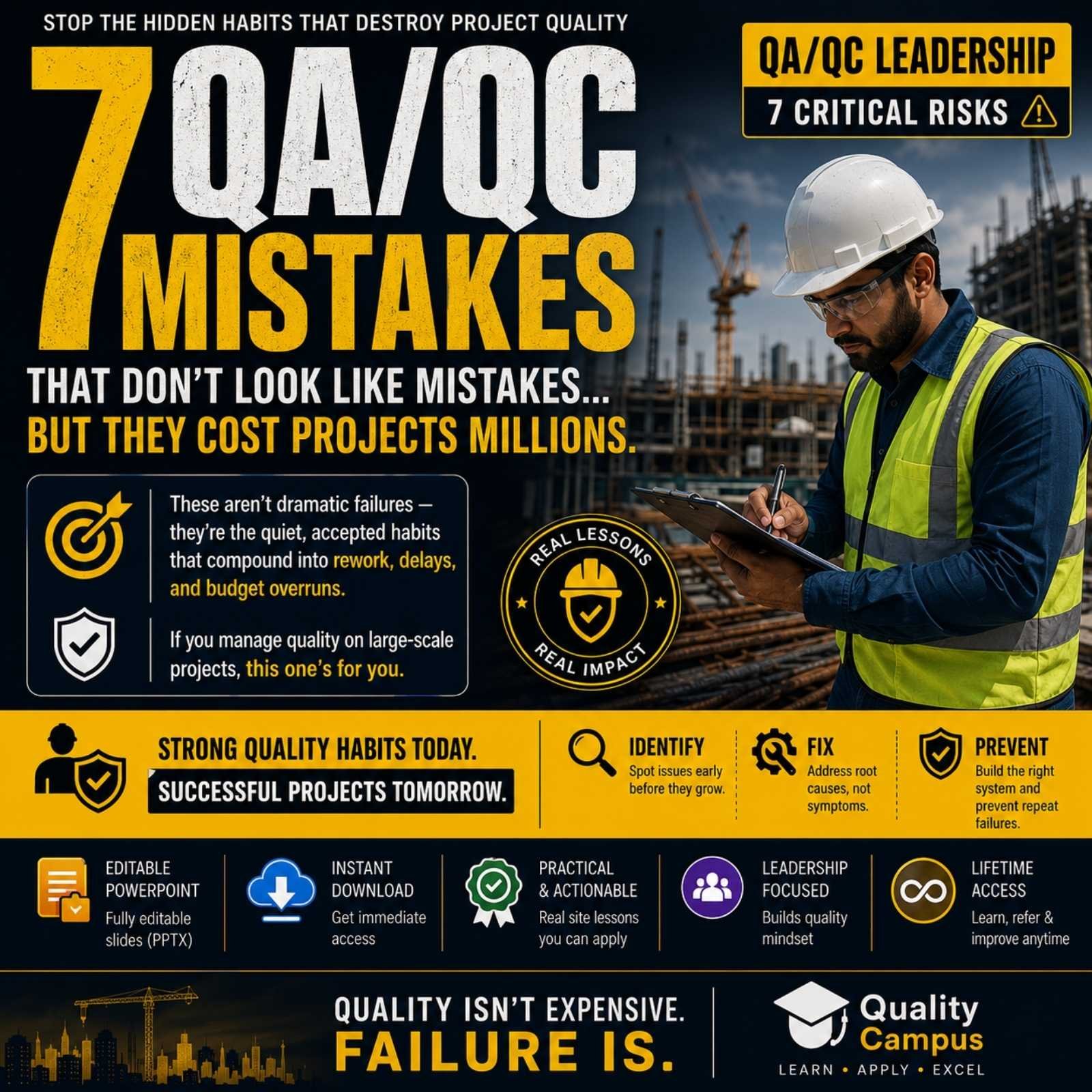
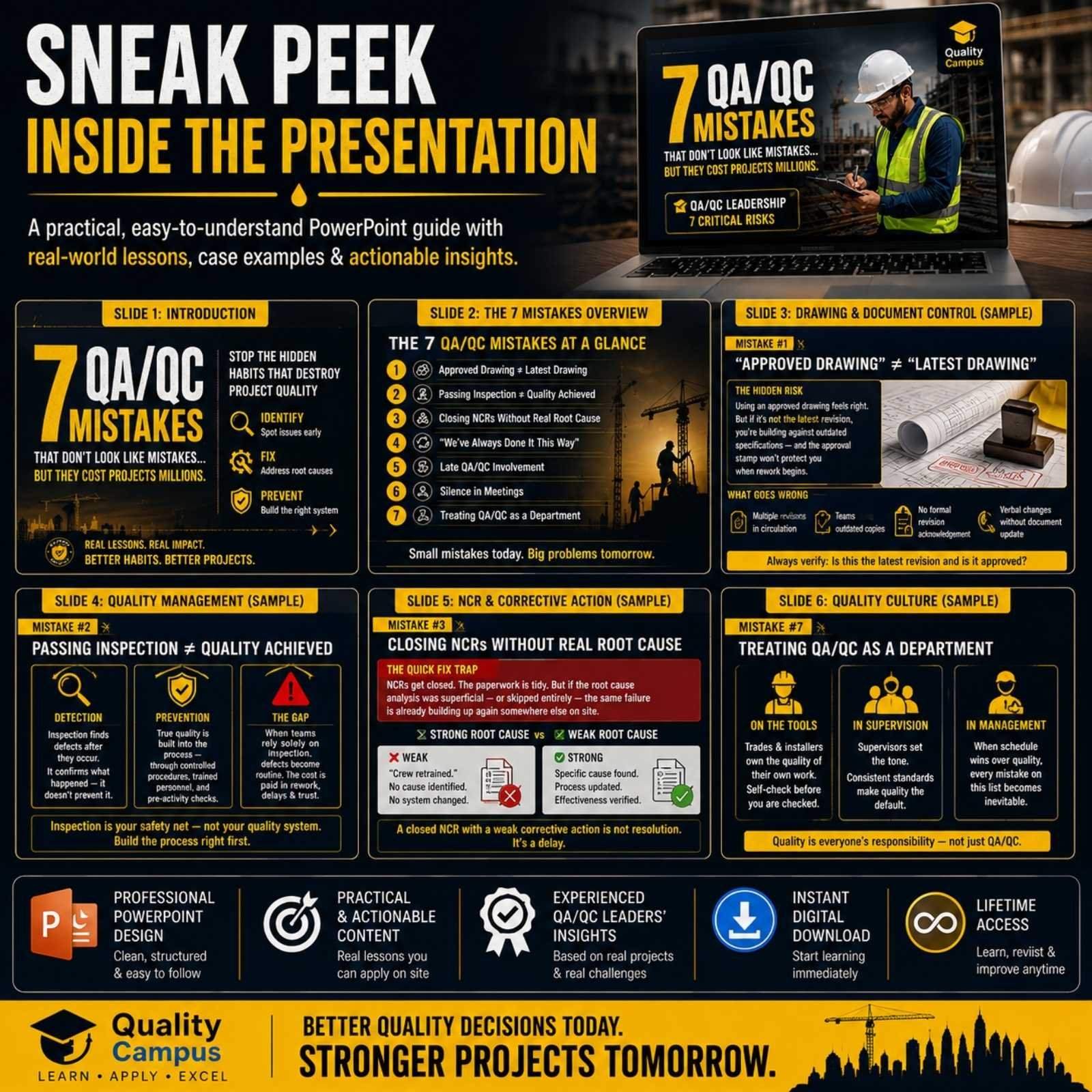
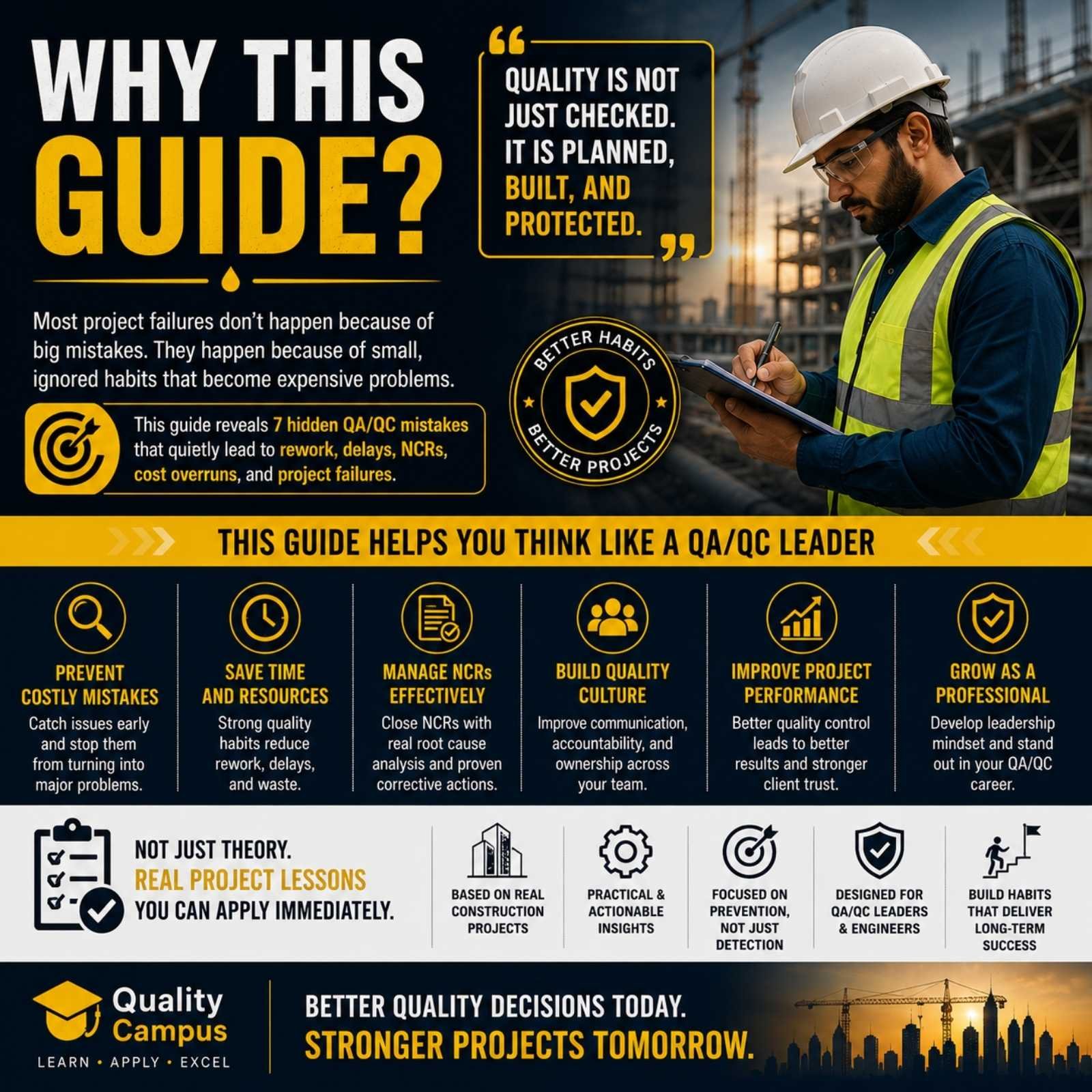
Technical knowledge alone doesn’t make a great QA/QC Engineer. Many project failures happen because of small mistakes that appear harmless at first—using outdated drawings, closing NCRs without identifying the real root cause, involving QA/QC too late, or assuming silence means everything is under control.
This guide explores seven critical QA/QC mistakes commonly seen on construction and infrastructure projects. Rather than focusing on interview questions, it develops the professional thinking, leadership mindset, and preventive approach expected from experienced QA/QC professionals. Every lesson is based on real project situations that can save time, reduce rework, and improve project quality.
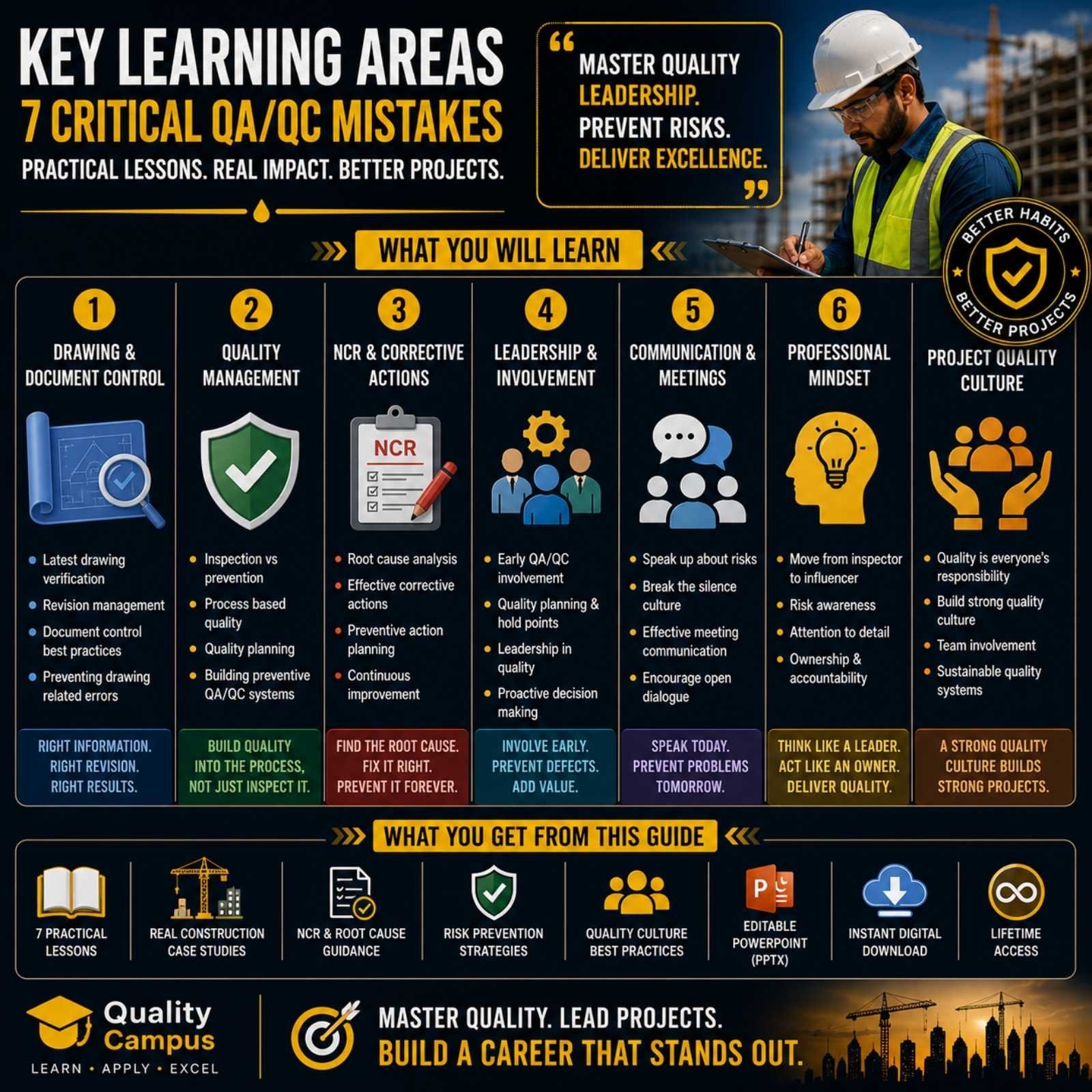
What You’ll Learn
Drawing & Document Control
- Latest Drawing Verification
- Revision Management
- Document Control Practices
- Preventing Drawing Errors
Quality Management
- Inspection vs Prevention
- Process-Based Quality
- Quality Planning
- Preventive QA/QC
NCR & Corrective Actions
- Root Cause Analysis
- Effective Corrective Actions
- Preventive Action Planning
- Continuous Improvement
Leadership & Communication
- Early QA/QC Involvement
- Quality Culture
- Meeting Communication
- Speaking Up About Risks
Professional QA/QC Mindset
- Leadership Responsibilities
- Project Risk Awareness
- Team Accountability
- Building Long-Term Quality Systems
What’s Included
- 7 Practical QA/QC Lessons
- Leadership-Based Learning
- Real Construction Case Studies
- NCR & Root Cause Guidance
- Quality Culture Best Practices
- Project Risk Prevention
- Editable PowerPoint (.PPTX)
- Instant Digital Download
- Lifetime Access
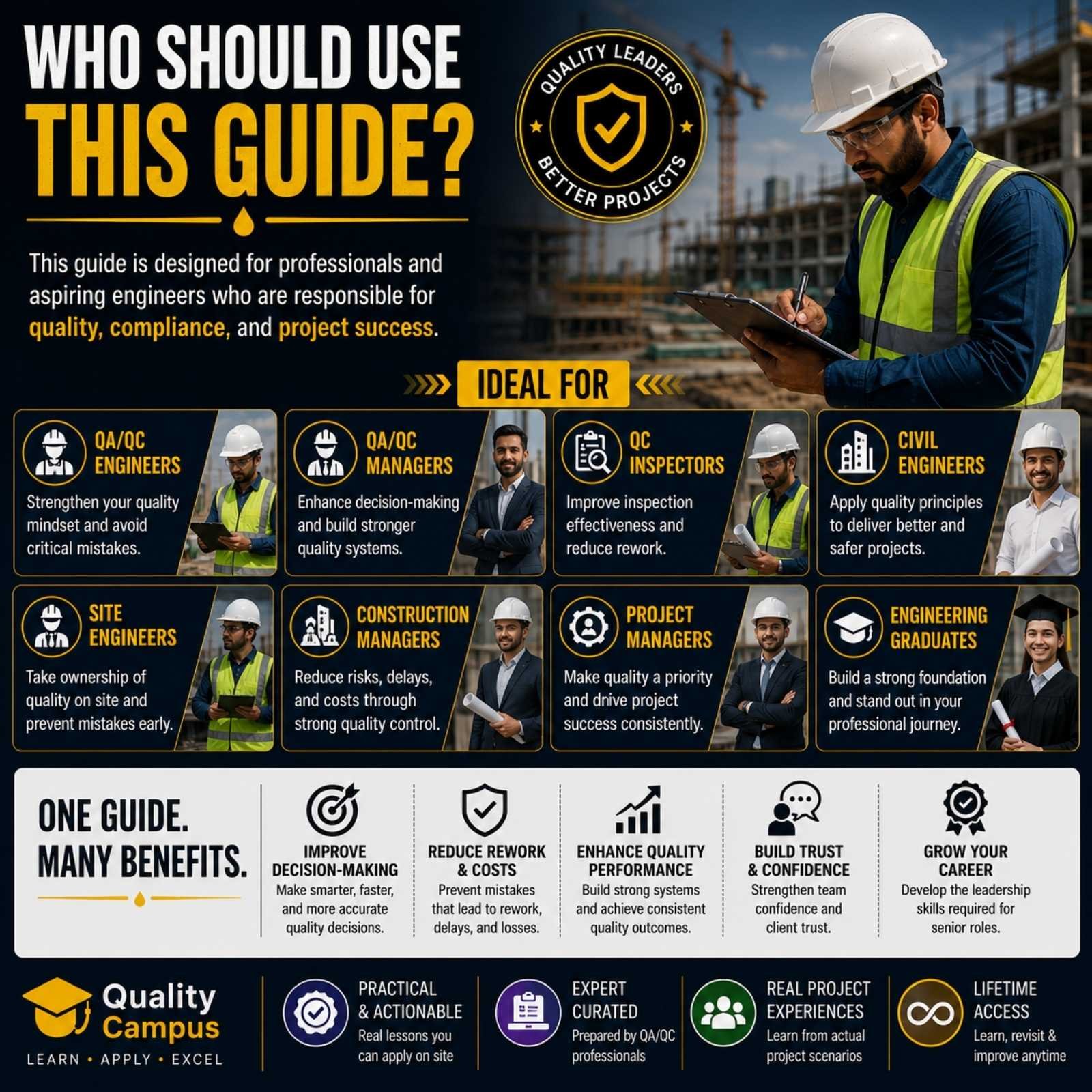
Who Should Use This Guide?
- QA/QC Engineers
- QA/QC Managers
- QC Inspectors
- Civil Engineers
- Site Engineers
- Construction Managers
- Project Managers
- Engineering Graduates
- Engineers Preparing for Leadership Roles
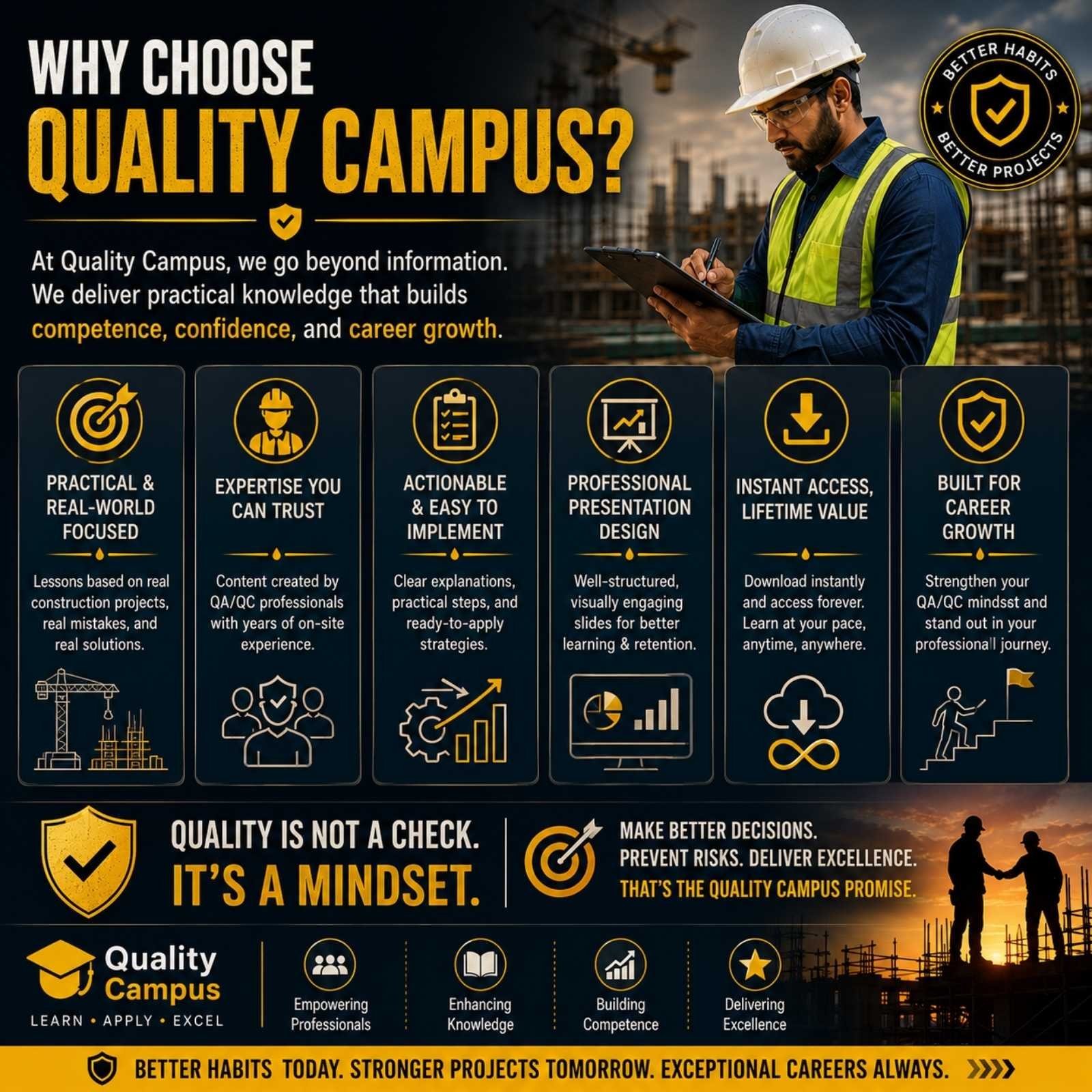
Why Choose This Guide?
Most QA/QC resources teach engineers how to answer interview questions. This guide goes further by helping you understand why projects fail despite experienced teams and approved procedures. It builds a preventive quality mindset through practical examples involving drawing control, inspections, NCR management, communication, leadership, and continuous improvement—skills expected from professionals responsible for delivering successful projects.
Reviews
There are no reviews yet.